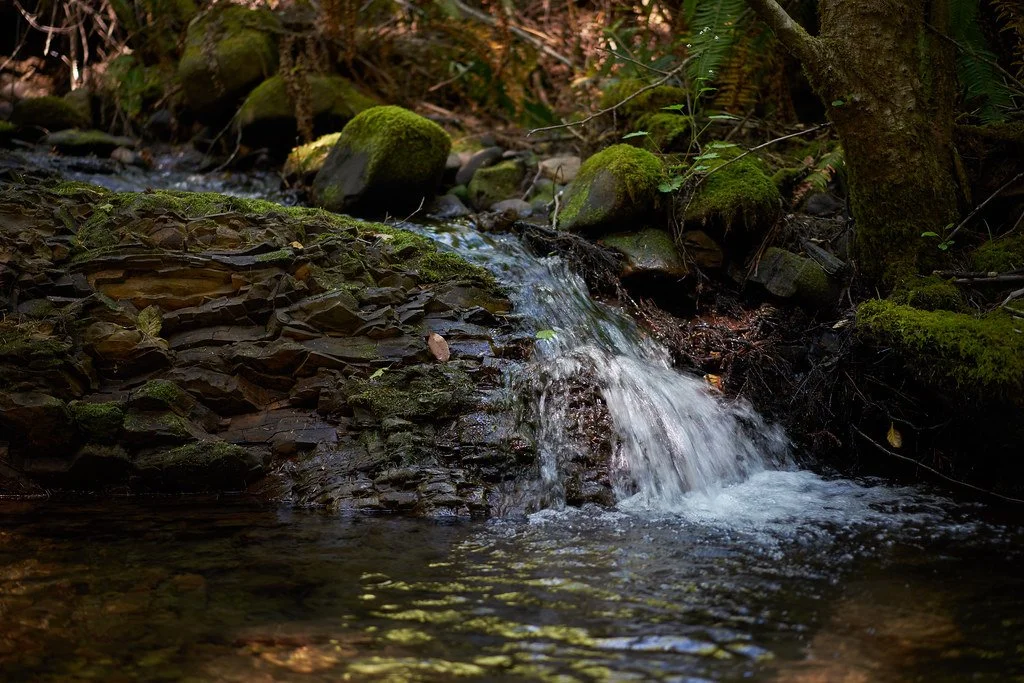
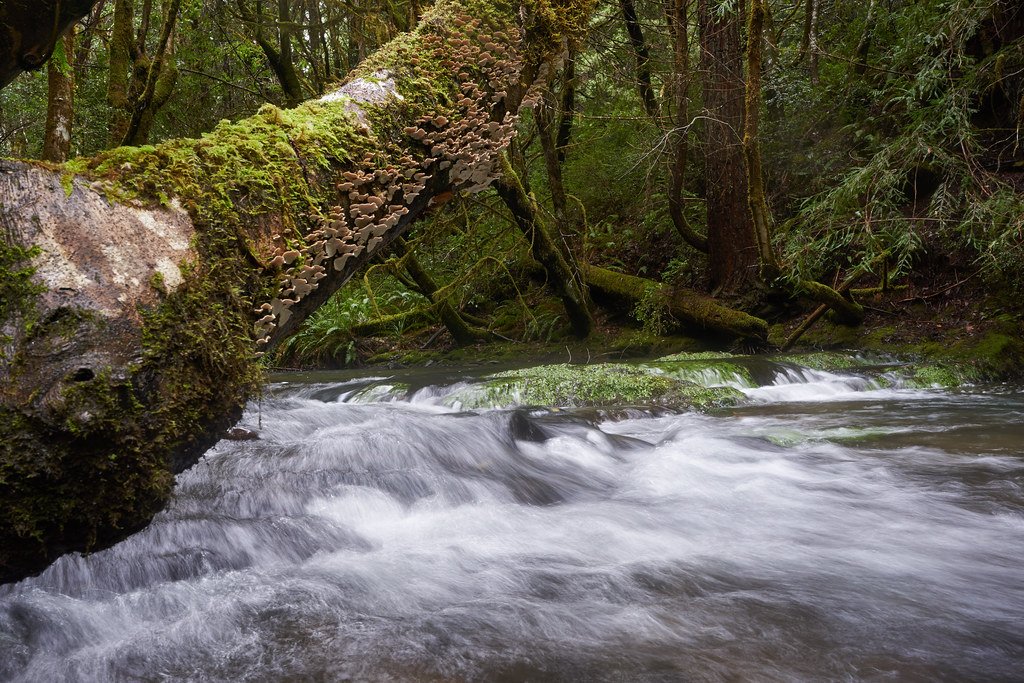
Help us protect Dutch Charlie Creek
Dutch Charlie Creek is the prime spawning habitat for California's endangered coho salmon, currently under threat from a reckless logging project with broad exceptions to the Forest Practice Rules. We have sued to stop this logging, and the court granted an injunction. We need your help to win. Our goal is permanent protection for the Dutch Charlie watershed as a sanctuary for coho.
-
• Dutch Charlie Creek is one of two reliable coho spawning streams in the upper South Fork Eel River, which is home to the last viable metapopulation of California’s endangered coho salmon. Other streams in the region do not have the consistently cool temperatures and critical habitat necessary for coho. California Dept of Fish and Wildlife identify Dutch Charlie Creek as top priority coho habitat. (source)
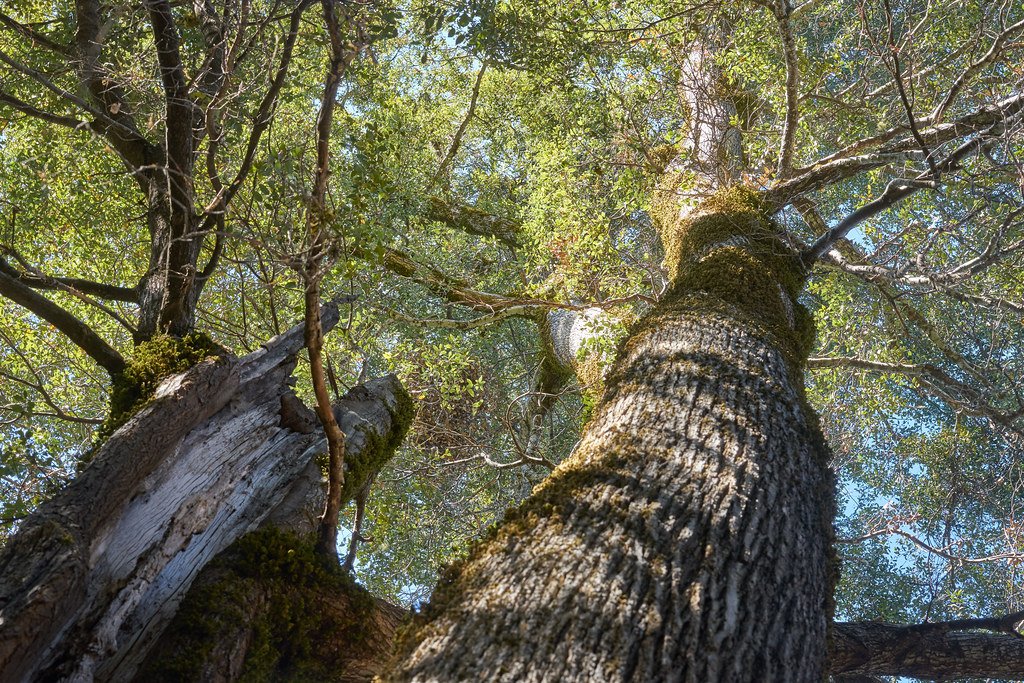
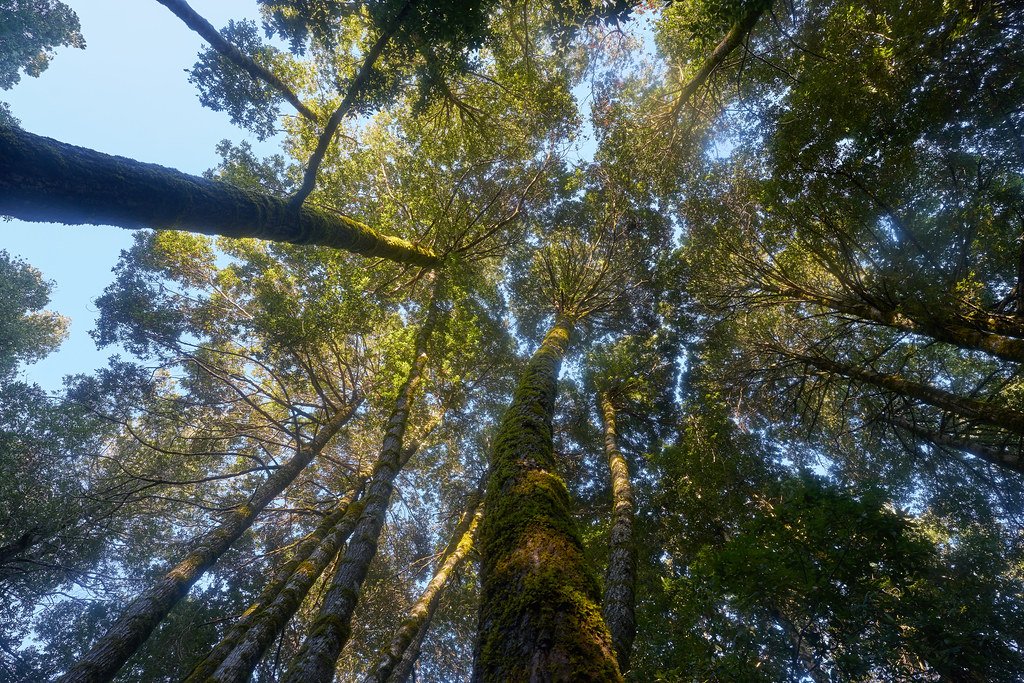
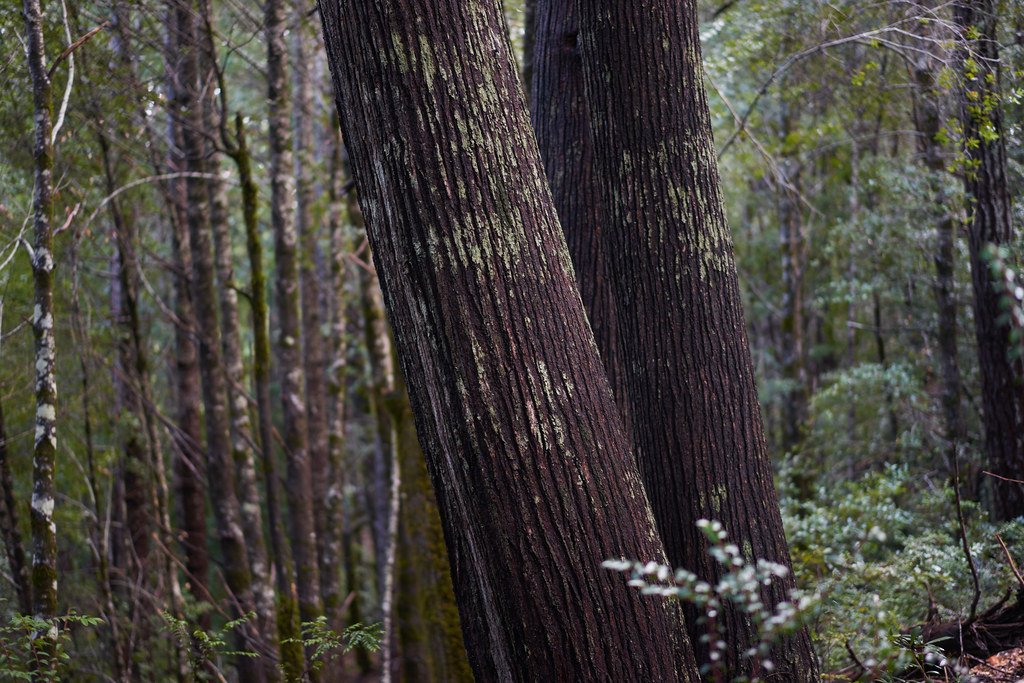
• Hundreds of old growth trees still live in this watershed. While most nearby watersheds have been logged multiple times and have very few old trees left, the last significant timber harvest in the Dutch Charlie watershed occurred 25 years ago, and much of it was only logged once. The watershed’s remaining large old trees and abundant diversity make it an extremely high priority for protection.
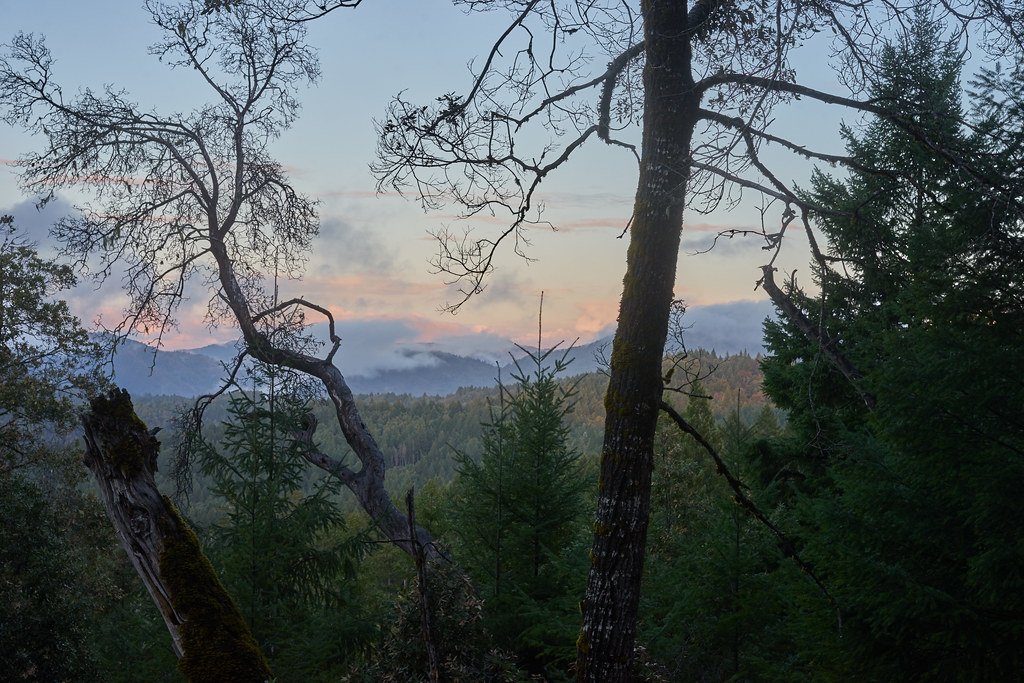
• The 2,800-acre watershed has no public roads. Roadless areas provide unique sanctuaries for wildlife that are increasingly hard to find.
• Dutch Charlie watershed is adjacent to over 30,000 acres of protected areas (see map below). Protecting Dutch Charlie watershed will extend this protected wildlife habitat connectivity another 3 miles toward the ocean.
-
• Exceptions to the standard Forest Practice Rules include bulldozing new roads near streams (source), using heavy equipment on steep slopes (source) and immediately adjacent to salmon streams (source), and cutting unmarked trees immediately adjacent to streams (source). All of these activities will be done immediately adjacent to the pools where coho salmon spawn. These activities are prohibited by California law unless the director of Cal Fire grants an exception.
• Cutting the largest oldest trees will severely set back the recovery of this forest, increase wildfire risk (source), cause landslides and erosion delivering sediment to the streams (source), increase stream temperatures (source), and reduce long term streamflows (source), directly killing coho and eliminating their habitat.
• Operating heavy equipment on dirt roads and steep slopes will dump sediment into the coho habitat. One of the primary haul roads is situated 20ft above the prime coho spawning pools. (source) The plan includes winter operations, bulldozing new roads and stream crossings (source), and logging on steep slopes with identified landslide risk (source), which will contribute to slope instability and erosion and cause significant sediment impacts to the creek and the South Fork Eel River.
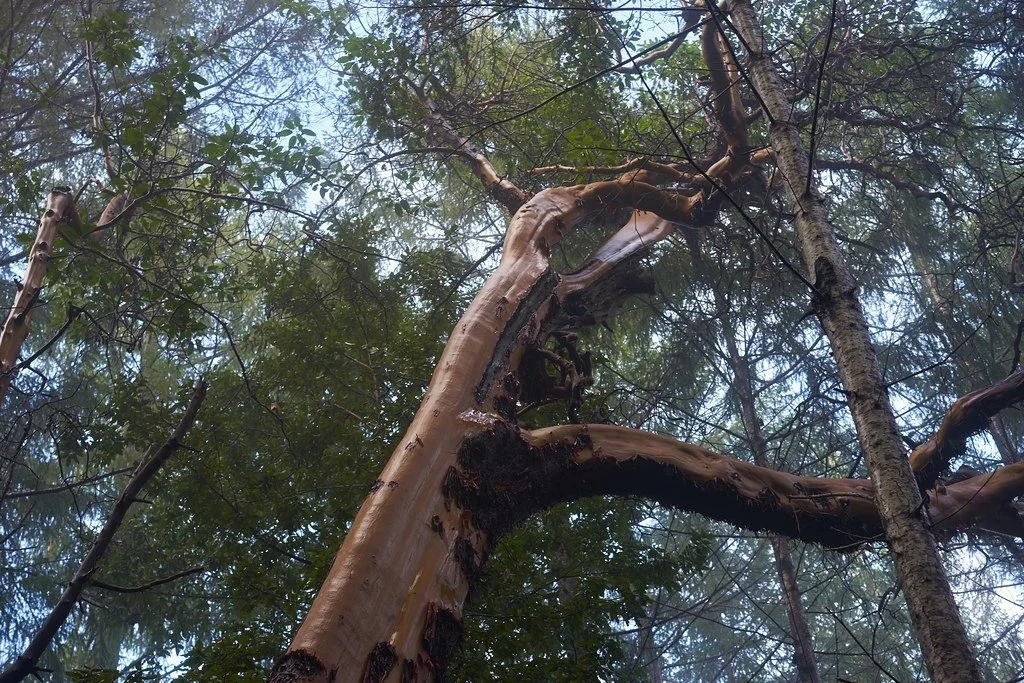
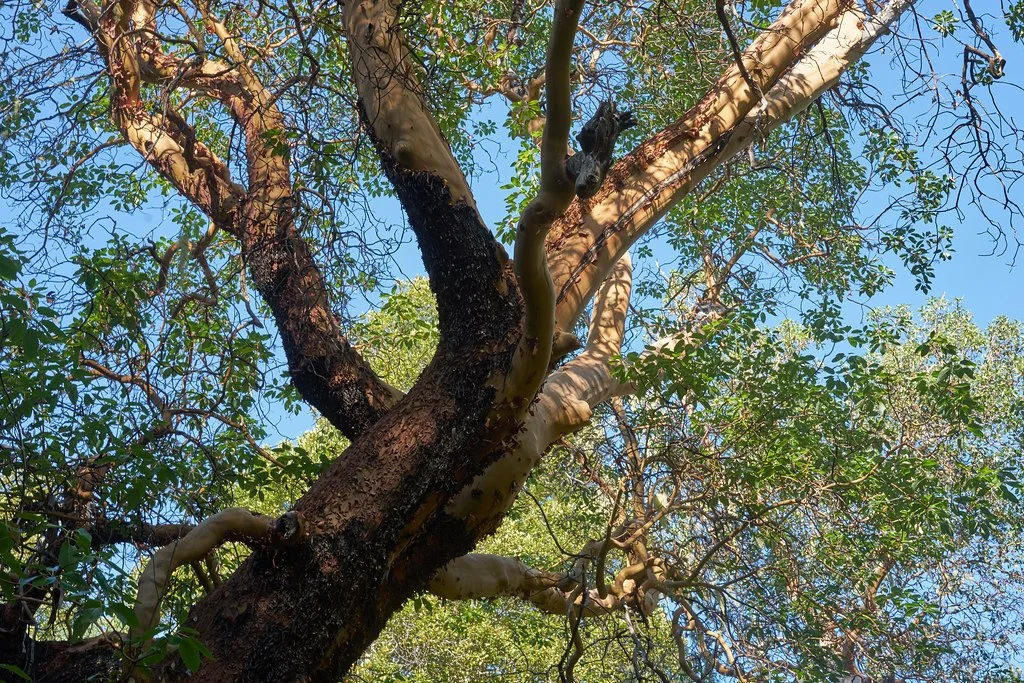
• Killing most of the tanoak and madrone across most of the THP area using herbicides, triggering a cascade of biodiversity loss. These trees are a food source for most of the wildlife in this forest. Their root systems have been in place for hundreds of years, and killing them with herbicides will replace the ancient diverse forest structure with a conifer plantation. The herbicides are toxic to wildlife (source) and known to cause cancer in humans (source).
(See our public comments here to read about all of this in much more detail)
-
2001: the last logging in Dutch Charlie watershed.
2019: Millions in state funding was used in a restoration project to decommission segments of road within the Dutch Charlie watershed. To get to these bits of road, the entire road network, 12+ miles of roads, was reopened with bulldozers. This happened to be done and paid for by the State, just in time for Redwood Timber Company (RTC) to submit their plan to log the watershed using these newly reopened and maintained roads.
2020: RTC submiitted the “Charlie Eagle” Timber Harvest Plan (THP). California Dept of Fish and Wildlife (CDFW) and Friends of Dutch Charlie Creek pointed out numerous problems with that plan. It was withdrawn in 2021.
Summer 2025: RTC submitted these two new plans, “Hot Tuna” and “Lincoln Logs” for review. The new plans ignored CDFW’s prior recommendations and our comments and instead ask for exceptions to the standard Rules in the opposite direction. Unfortunately, the people who review timber harvest plans at CDFW had been replaced, and the new people at CDFW completely ignored the previous recommendations and our letters.
Fall 2025: We wrote extensive comments on the plans, and prepared the lawsuit to stop them, and asked RTC to agree to wait on cutting trees until the lawsuit could be heard, but RTC ignored this request.
RTC then asked Cal Fire to delay approval of the plans, month after month, until right before the 4th of July weekend, apparently in hope that we would “fade away”.
July 2026: Cal Fire approved the plans on July 2 and 3 and posted what appears to be an AI-generated Official Response to public comments. RTC immediately began logging, and we filed the lawsuit on July 7.
July 13: Judge Ann Moorman of Mendocino County Superior Court denied our request for a Temporary Restraining Order to halt logging.
July 24: Judge Tucher denied our appeal for a temporary stay of logging.
August 17: Judges Petrou, Tucher, and Rodríguez granted our appeal, overturning Ann Moorman's decision, which halts logging.
August 18: Redwood Timber Co continues yarding and hauling logs out of the timber harvest area, calling these activities "protective actions".
August 21: Cal Fire observes RTC constructing new road within the plan area, in violation of the court’s order.
August 27: Hearing in Ukiah on preliminary Injunction.
September 2: Judge Scott grants preliminary injunction, halting logging until the lawsuit can be fully resolved.
How to help
We are in litigation to stop logging. On Aug 17, the Court of Appeal ordered logging to halt, and on Sept 2 the court granted an injunction halting logging for the duration of the lawsuit. We expect we’ll need to raise another $20,000 to win the lawsuit. Friends of Dutch Charlie Creek are all volunteers; all donations go directly to litigation costs.
Donations are tax-deductible (EIN 94-3263110).
Write checks to ‘Forest Unlimited’ (our 501(c)(3) fiscal sponsor) with “Friends of Dutch Charlie Creek” as the memo, and mail to:
Forest Unlimited, PO Box 506, Forestville, CA 95436
Watch the coho run up Dutch Charlie Creek and spawn
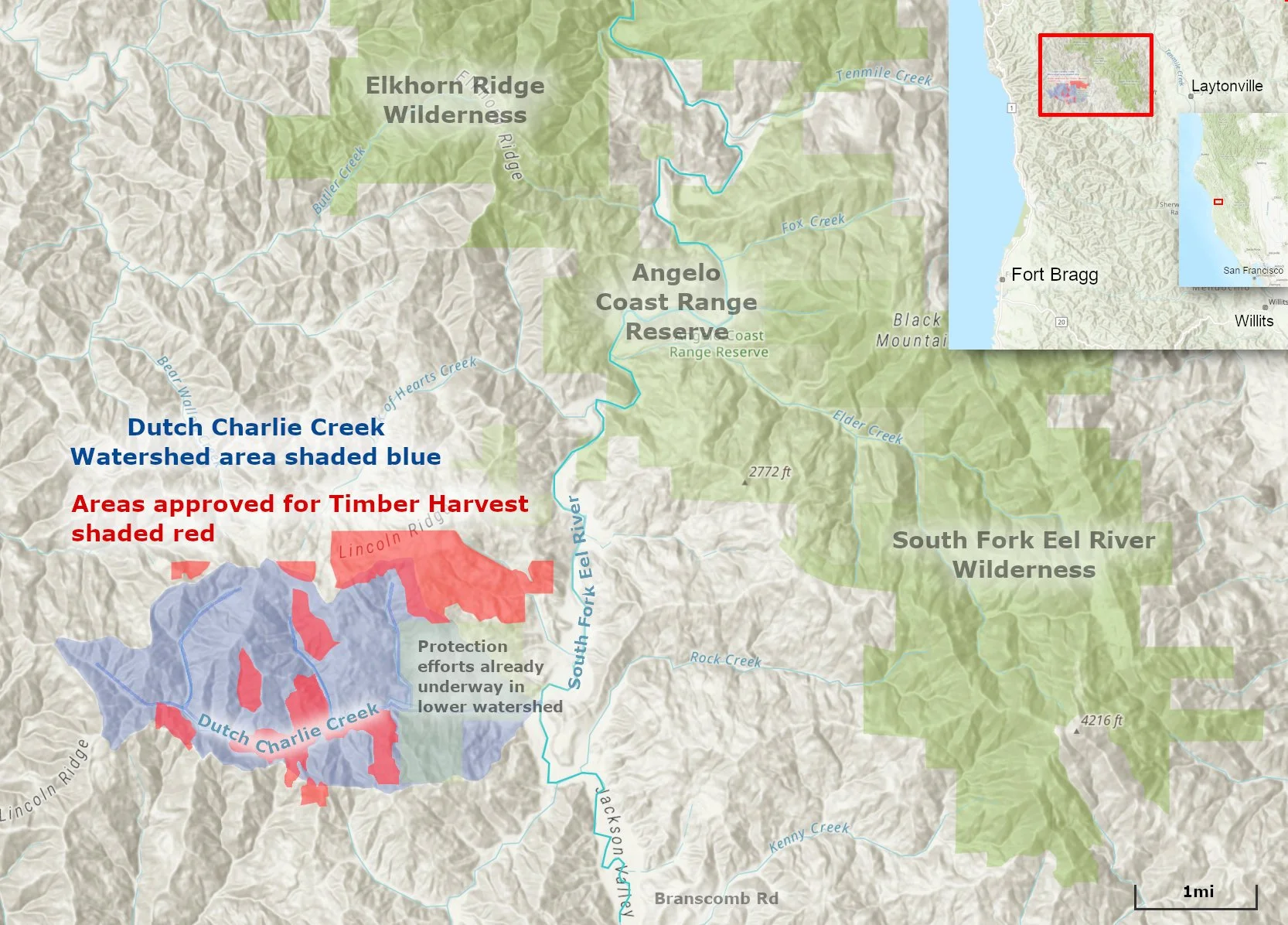
Map showing Dutch Charlie Creek watershed in context with nearby protected areas
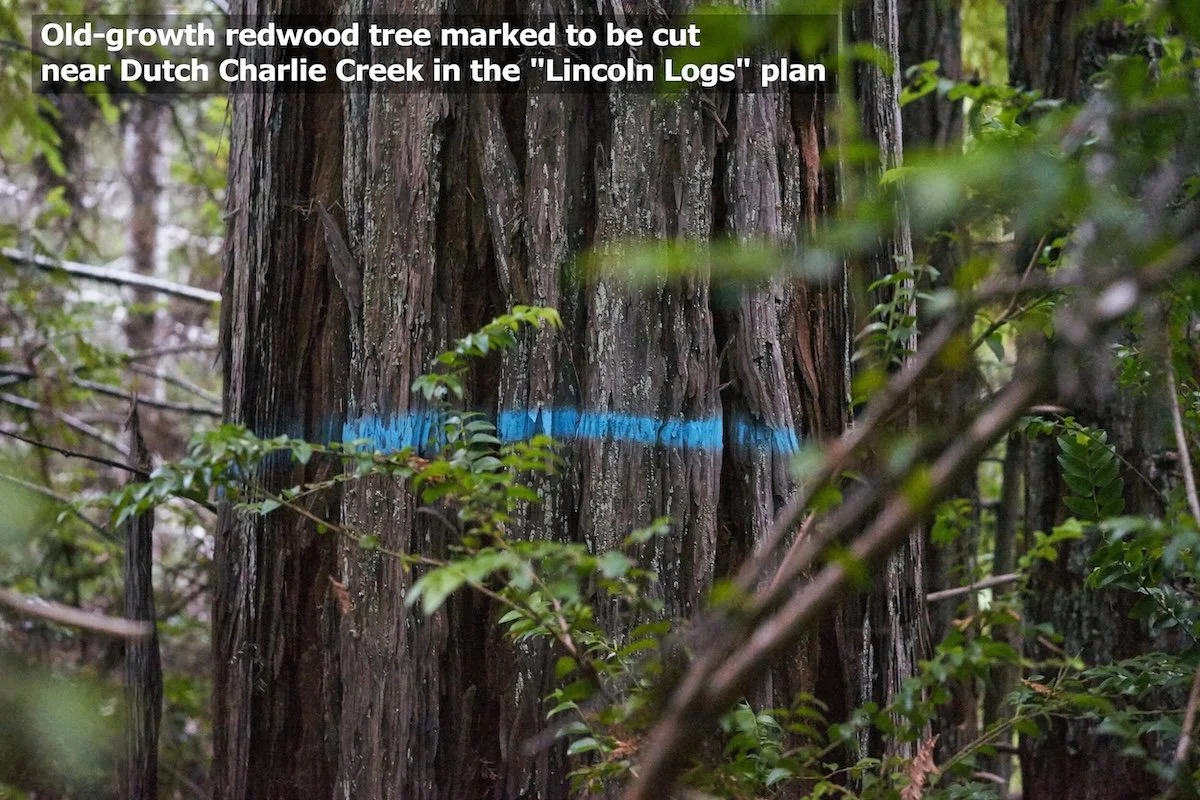
Old growth redwood tree marked to be cut near Dutch Charlie Creek in the “Lincoln Logs” plan. The plan areas are home to hundreds of old growth trees — redwood, doug fir, madrone, tanoak, and chinquapin — who will be cut if the logging is allowed to continue.
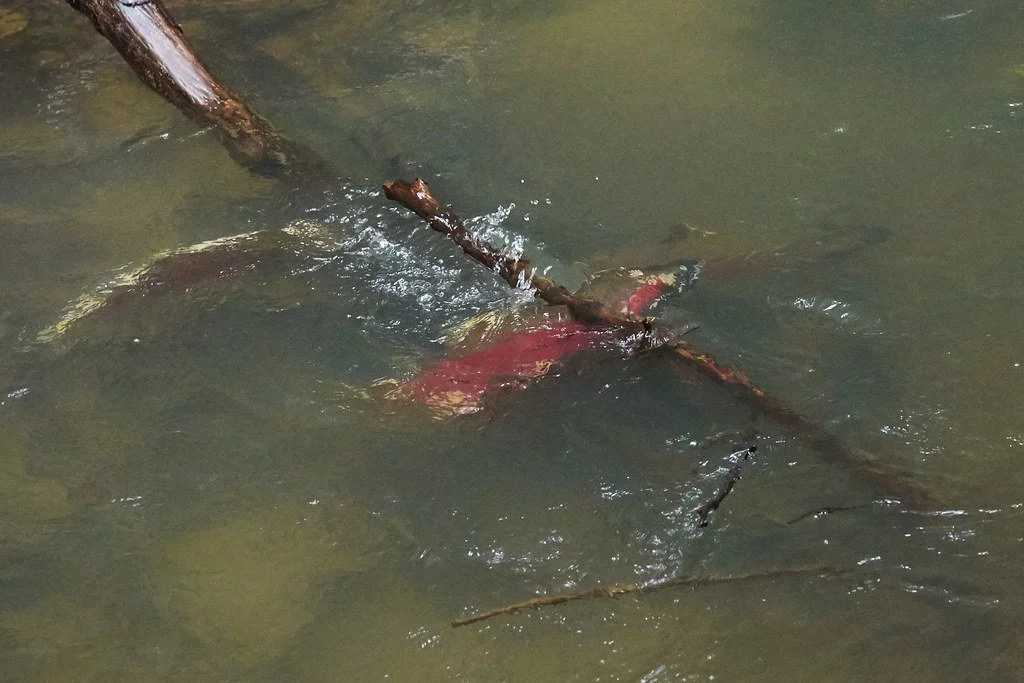
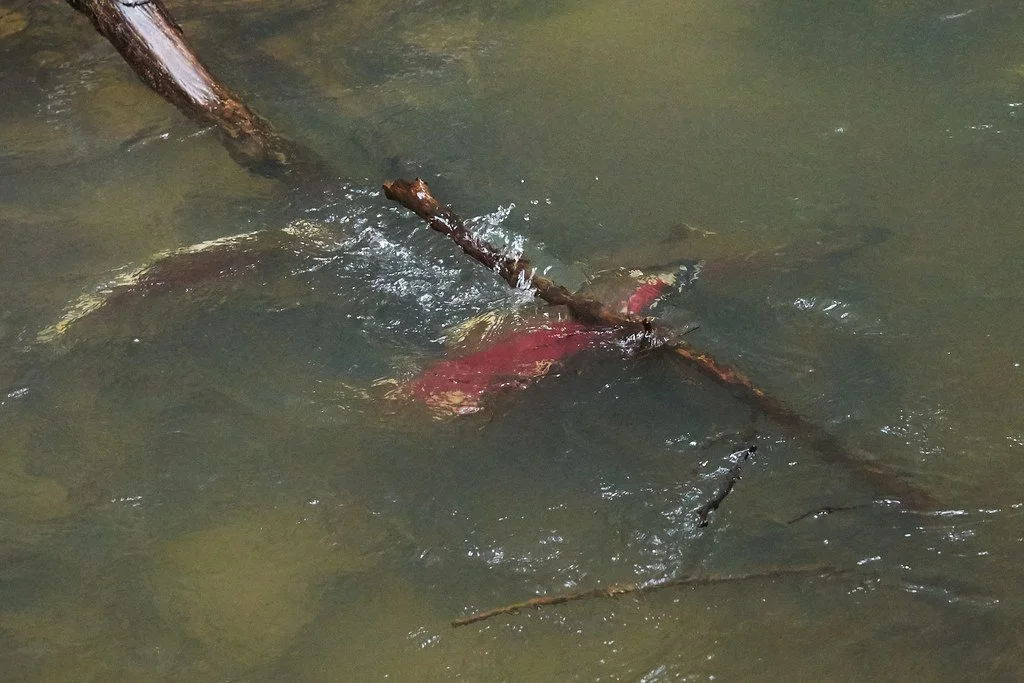
Coho returning from the ocean to spawn in Dutch Charlie Creek
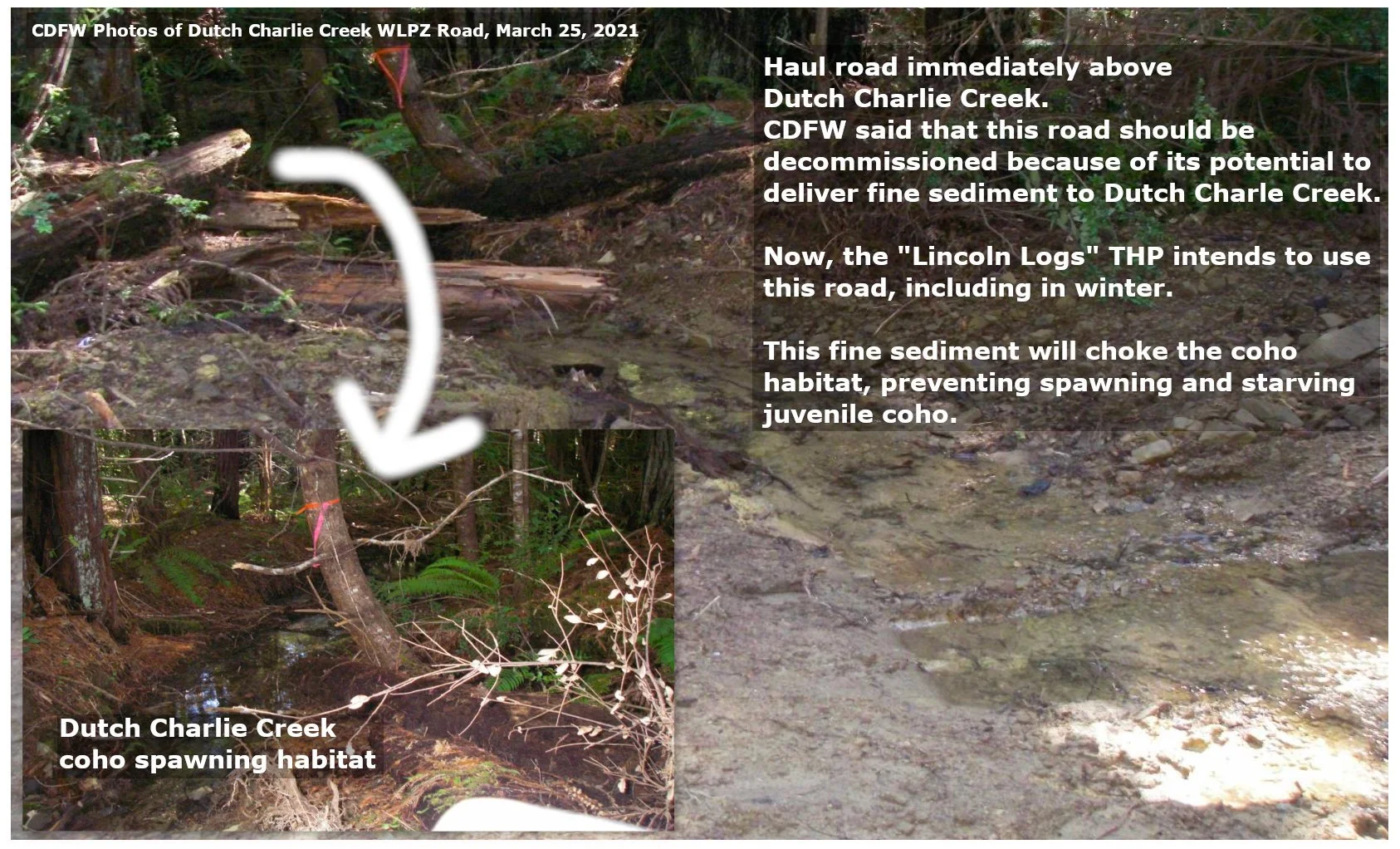
CDFW photos (source) of haul road along Dutch Charlie Creek, showing the condition of the road and how driving on it will deliver fine sediment into the creek where the coho spawn. The recommendations made by CDFW here in 2021 were ignored by the new timber harvest plans in 2025, and CDFW approved these new plans without mention of them. CDFW has been entirely unresponsive to emails about this.
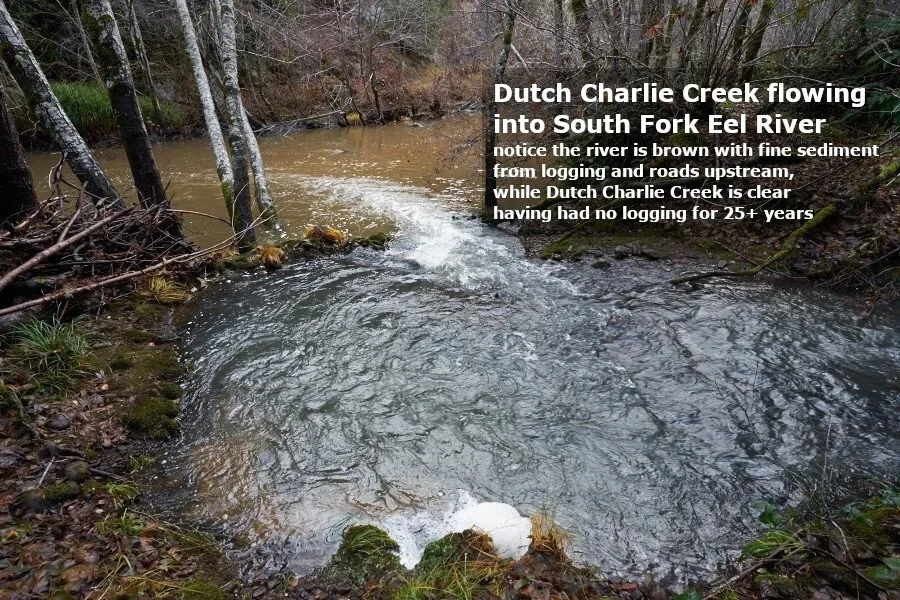
Dutch Charlie Creek flowing into the South Fork Eel River
Notice notice the river (background) is brown with fine sediment, caused by erosion from roads and logging upstream, while Dutch Charlie Creek’s water (foreground) is clear. Having had no logging for 25+ years, Dutch Charlie Creek receives far less fine sediment than most of the region’s watercourses, making it a much more suitable habitat for salmon. The fine sediment blinds salmon, buries their redds (eggs), and buries the gravel where the insects they depend on for food can live. A creek buried in fine sediment is inhospitable to salmon.
Watch juvenile coho surveys with Pat Higgins
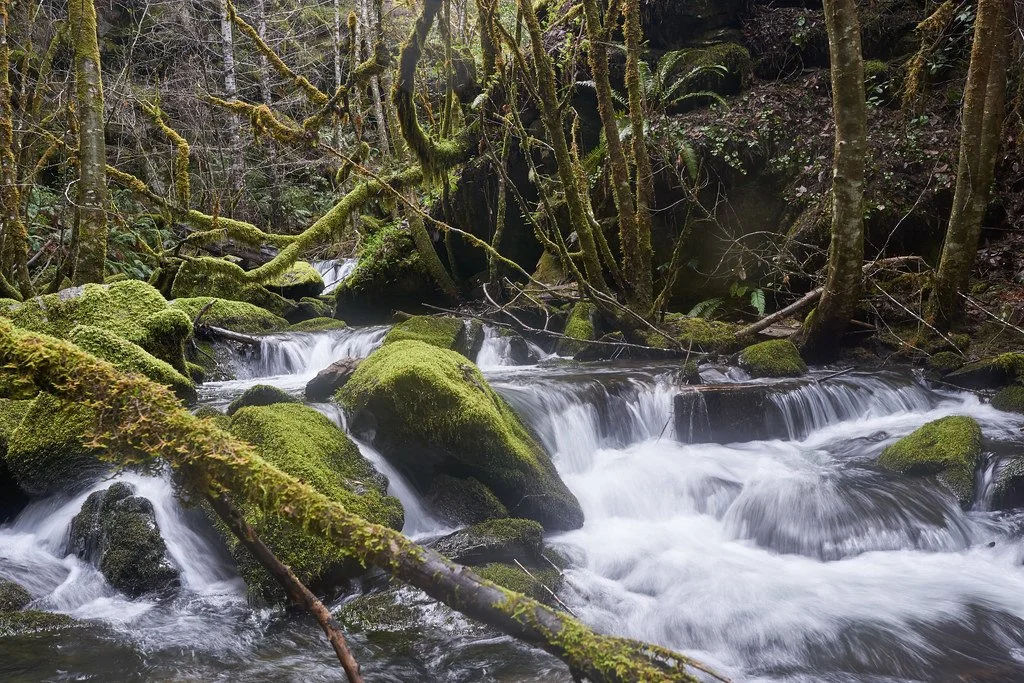
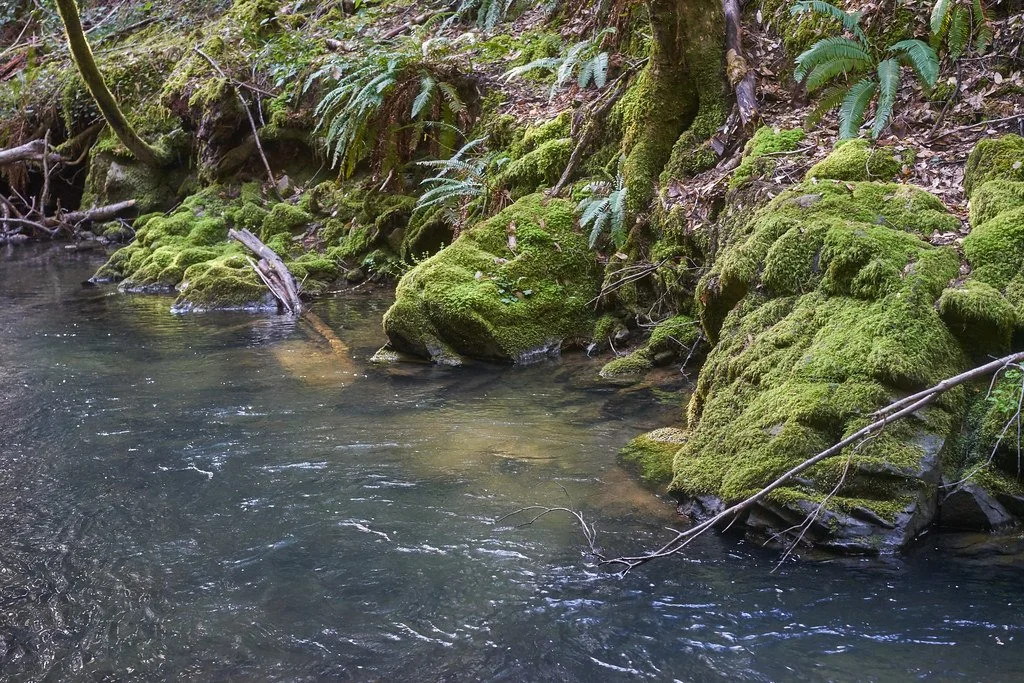
Wading up the first mile of Dutch Charlie Creek in early spring
To show support for this effort, add your name to the Statement below. (pdf here)
Statement of Intent to Protect Dutch Charlie watershed
Endorsed by Friends of the Eel River • Center for Biological Diversity • First Mennonite Church of San Francisco • For The Wild • Trees Foundation • see all
Dutch Charlie Creek is one of the last reliable spawning and rearing habitats for California's endangered coho salmon. Surveys consistently show Dutch Charlie having the highest coho redd density of all tributaries to the South Fork Eel River, which is home to the most consistently abundant coho population in California. Dutch Charlie Creek's Coho habitat is key to the continued recovery of this population.
Most watersheds in the region have been industrially logged multiple times and, as a result, have degraded spawning habitat and very few old trees. As most of the Dutch Charlie watershed was only logged once, its water remains reliably cold and clear, and hundreds of old growth trees still live here and should never be cut.
This watershed is mostly steep and unstable terrain with large wetlands along the middle reach where coho spawn and rear. Logging here would require driving heavy equipment on unstable steep slopes, through these wetlands, and on extensive haul roads immediately adjacent to the creek. Resulting soil disturbance would trigger landslides and erosion and deliver chronic fine sediment into Dutch Charlie Creek, which would smother coho redds, fill pools and eliminate habitat for the aquatic insects that juvenile coho rely on for food. Soil compaction and erosion from logging would increase destructive flooding during storms, and make pools shallower and warmer in the summer, eliminating coho rearing habitat.
Use of herbicides to eradicate hardwoods would replace millennia-old forest diversity with a conifer plantation, contaminate soil and aquatic habitat with toxins, and eliminate the food sources that wildlife depend on.
We strongly oppose industrial logging in the Dutch Charlie watershed. We call for Cal Fire, California Department of Fish and Wildlife, California Geological Survey, the State and Regional Water Boards, and Mendocino County and California judges to respect and fully enforce the Clean Water Act, Endangered Species Act, and the California Environmental Quality Act, to void approval of current timber harvest plans in this watershed, and to not allow similar plans to proceed in this watershed in the future.
For its unique and significant value as a refuge for recovering coho salmon and its rare abundance of old growth trees, the entirety of the Dutch Charlie watershed should be permanently protected from extractive or commercial activities or development.
August 2, 2026
Friends of Dutch Charlie Creek
Endorsed by:
Add your name
To support this effort, endorse the Statement of Intent to Protect Dutch Charlie watershed above by adding your name (or your organization’s name) here.
We will send this letter with the full list of signatures to Cal Fire, CDFW, and the other agencies.
To support this work, please donate to help us keep the lawsuit going - this is the immediate need in order to protect this watershed.
Below, read the public comments that were submitted on the Lincoln Logs and Hot Tuna THPs.
Public Comments on Lincoln Logs THP
Below, see some of the public comments that were submitted to Cal Fire on the Lincoln Logs THP.
Comment by fishery biologist on "Lincoln Logs" Plan, Dec 25, 2025 (pdf) on the Plan's significant impacts to endangered coho salmon and threatened steelhead trout and their habitat. view
Comment by fire ecologist on "Lincoln Logs" Plan, Dec 26, 2025 (pdf) on impacts to potential future wildfire risk as a result of removing mature trees, as well as other ecological impacts that will ultimately make the forest less resilient to fire. view
Comment by biologist on "Lincoln Logs" Plan, Dec 16, 2025 (pdf), on impacts to amphibians and aquatic habitat, including herbicide impacts. view
Comment by Friends of Dutch Charlie Creek, on "Lincoln Logs" Plan, Dec 26, 2025 (pdf) on the THP's many failures to follow the law regarding environmental impacts, including its failure to assess impacts to coho salmon habitat from sediment delivery, temperature impacts, and changes to peak and base flows. view
Comment by Friends of Dutch Charlie Creek, on "Lincoln Logs" Plan, Oct 2, 2025 (pdf) requesting that Cal Fire require the THP to incorporate critical protection measures previously recommended by the CDFW for the previously withdrawn Charlie Eagle THP in the same area. view
Comment by Friends of Dutch Charlie Creek, on "Lincoln Logs" Plan, Dec 24, 2025 (pdf) on the haul road immediately adjacent to Dutch Charlie Creek, and in particular the sediment impacts of using this road. view
Comment by ecologist on "Lincoln Logs" Plan, Sept 15, 2025 (pdf) on impacts to wildlife habitat. view
Comment by ecologist on "Lincoln Logs" Plan, Sept 14, 2025 (pdf) on impacts to wildlife. view
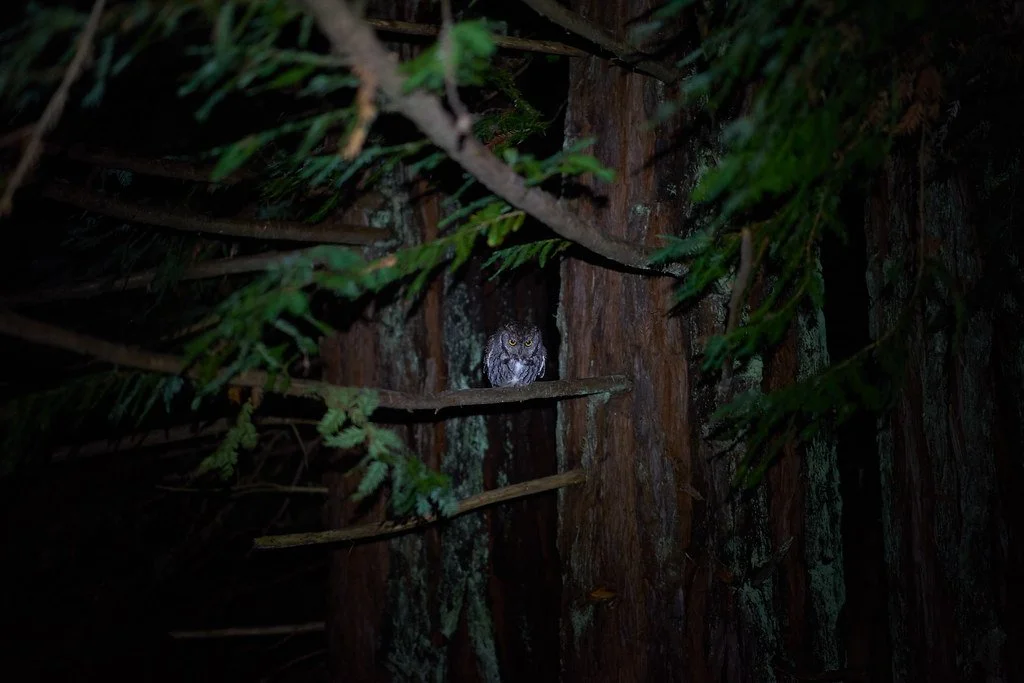
Comment by Friends of Dutch Charlie Creek, on "Lincoln Logs" Plan, Dec 25, 2025 (pdf) on the THP's failure to lawfully evaluate impacts on Northern Spotted Owls and their habitat. view
Public Comments on Hot Tuna THP
Below, see some of the public comments that were submitted to Cal Fire on the Hot Tuna THP.
Comment by fishery biologist on "Hot Tuna" Plan, Aug 25, 2025 (pdf) on the Plan's significant impacts to endangered coho salmon and threatened steelhead trout and their habitat. view
Comment by fishery biologist on "Hot Tuna" Plan, Nov 3, 2025 (pdf) additional comments on the Plan's sedient, temperature, and flows impacts. view
Comment by fire ecologist on "Hot Tuna" Plan, Nov 19, 2025 (pdf) on impacts to potential future wildfire risk as a result of removing mature trees, as well as other ecological impacts that will ultimately make the forest less resilient to fire. view
Comment by Friends of Dutch Charlie Creek, on "Hot Tuna" Plan, Sept 2, 2025 (pdf) requesting that Cal Fire require the THP to incorporate critical protection measures previously recommended by the CDFW for the previously withdrawn Charlie Eagle THP in the same area. view
Comment by Friends of Dutch Charlie Creek, on "Hot Tuna" Plan, Nov 3, 2025 (pdf) on the THP's many failures to follow the law regarding environmental impacts, including its failure to assess impacts to coho salmon habitat from sediment delivery, temperature impacts, and changes to peak and base flows. view
Comment by Friends of Dutch Charlie Creek, on "Hot Tuna" Plan, Nov 13, 2025 (pdf) on the THP's failure to lawfully evaluate impacts on Northern Spotted Owls and their habitat. view
Comment by Friends of Dutch Charlie Creek, on "Lincoln Logs" Plan, Nov 23, 2025 (pdf) on the haul road immediately adjacent to Dutch Charlie Creek, and in particular the sediment impacts of using this road. view
Comment by ecologist on "Hot Tuna" Plan, Aug 31, 2025 (pdf) on impacts to wildlife. view
If you feel drawn to help in other ways, or you have connections who could help, please write us at friendsofdutchcharliecreek@gmail.com and we’ll be in touch. We could use help with spreading the word, media, writing to the agencies responsible for enforcing the law here (CDFW, CGS, the region and state Water Boards, and Cal Fire), and writing to our representatives who have oversight of those agencies. In the case of these THPs, we submitted extensive and very specific comments calling for changes to the plans, including repeating recommendations that CDFW had already made on an earlier version of the same plan 5 years before. Our comments were essentially ignored, not a single change was made to the plan, and they were approved and began logging the same day they were approved. This regulatory process is broken.